
A simple homestead reference for healthy grains and consistent fermentation
Milk kefir is a traditional fermented drink made by culturing milk with kefir grains — a living community of beneficial bacteria and yeasts. With minimal care, kefir grains can last indefinitely and become a stable part of a traditional kitchen. This guide covers fermentation methods, troubleshooting, and simple routines to keep grains thriving.
With simple care, kefir grains can live indefinitely and will gradually multiply.
If you would like to purchase a kefir starter kit, including jars, breathable mesh lids, a strainer, and a tablespoon of kefir grains, click here.
Regardless of where you purchase your kefir grains, it is important to ensure they have previously been fed with Fresh A2 milk, and continue to feed them as such. If that is not an option where you live, you can purchase whole milk from the store (kefir loves fat), but it will not produce as much beneficial bacteria and will remain thinner throughout fermentation.
When your grains arrive, they may appear flat, soft, slightly dry, or have a mild smell. This is completely normal after shipping. The grains simply need fresh milk to recover. Within a few fermentation cycles they will wake up, strengthen, and begin producing proper kefir. DO NOT RINSE THEM WITH WATER. Tap water, specifically the chlorine remnants, will kill the beneficial microbes. If you feel you do need to rinse them, do it with milk. Follow the steps below to get started.
Standard Batch Method
- Place kefir grains in a clean glass jar.
- Add milk (about 1 cup per tablespoon of grains).
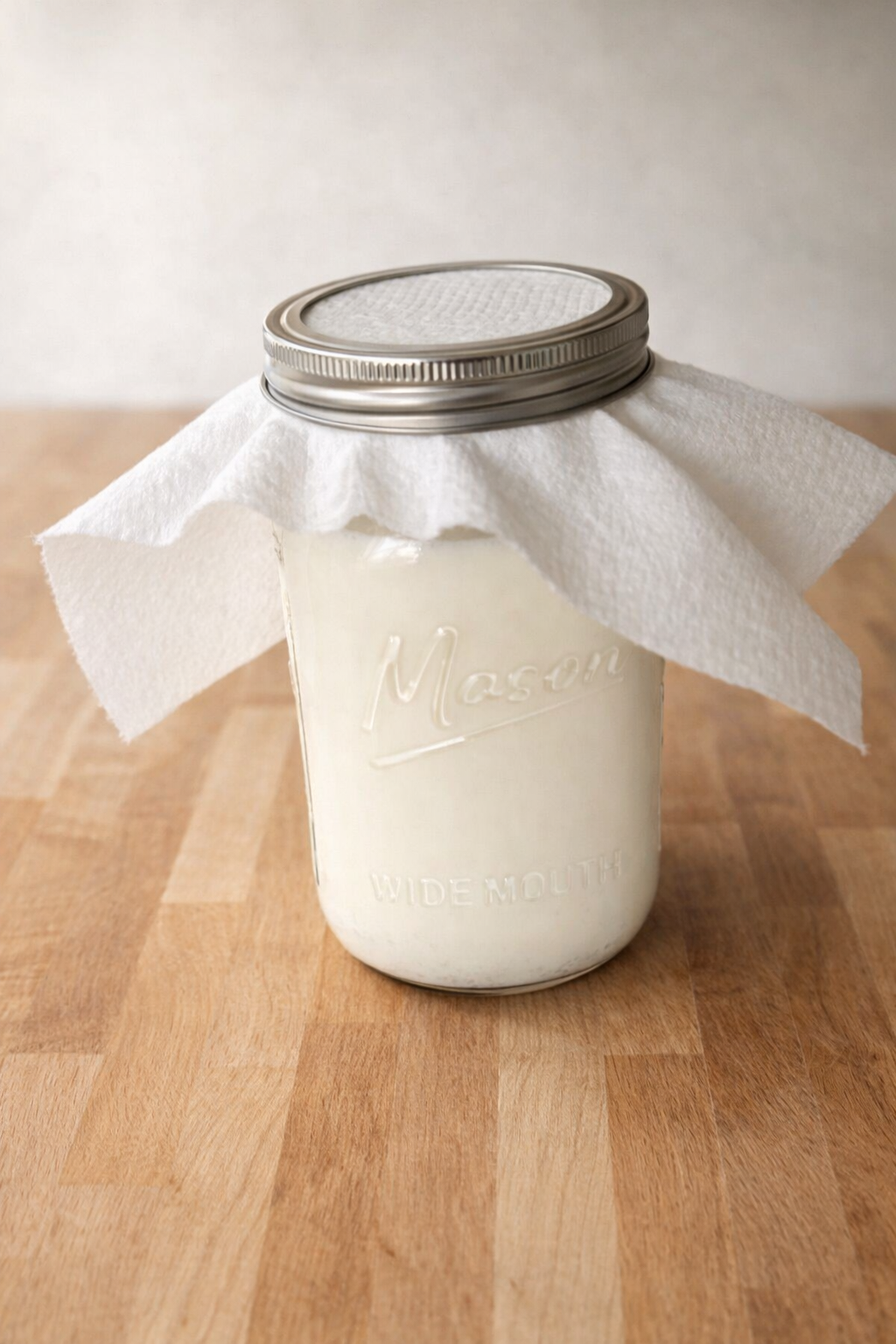
- Cover with a breathable lid such as a mesh lid, cloth, or paper towel.
- Ferment at room temperature for 24 hours, ensuring it is out of direct sunlight and away from heat (your pantry or a cabinet should work great).
- After 24 hours, gently stir, then strain the grains out with a non-reactive strainer. This means no metal. Unfortunately, plastic is the best option for a strainer – you can find them on Amazon listed as Kefir Strainers if you don’t buy the kit shown above from Meadow and Millstone.
- Return grains to the same jar and add fresh milk to begin the next batch. I typically only wash my jar every 2 or 3 feeds, as the remnants continue to feed the good bacteria.
Typical Fermentation Timeline
| Time | What You’ll See | What It Means |
| 0-6 Hours | Milk Looks Unchanged | Fermentation is just beginning |
| 6-12 Hours | Slight Thickening | Active bacterial fermentation |
| 12–18 hours | Creamy texture, mild tangy smell | Usually the ideal drinking stage |
| 18–24 hours | Very thick, stronger tang | Fully fermented kefir |
| 24+ hours | Curds and whey separation. Cream separation is normal | Over fermented but still usable. |
Grain Health Troubleshooting
- Kefir too sour – This typically means it is fermenting too long, drink it earlier in the fermentation process, or increase your milk to kefir ratio
- Grains not growing – Typically the milk is too cold, or you’re not giving it enough. Move it to a warmer spot, such as the top of the fridge, and ensure you’re feeding it a cup of milk per tablespoon of grains.
- Thin Kefir – Too few grains, or too early on in the fermentation process. Kefir grains will multiply overtime with healthy feedings. Make sure you’re using whole (preferably fresh) milk and let them ferment slightly longer.
- Grains shrinking – too frequent of refrigeration. Refrigeration is a great tactic to help preserve your kefir when you aren’t up for feeding it every day, but let it have a few days back at room temperature to get back on track.
What to Expect in the First Week
When grains are recovering from shipping, fermentation can be unpredictable.
During the first few days you may notice:
• thin kefir
• little separation
• mild flavor
This is normal.
Keep replacing the milk every 24 hours and within 3–5 days the grains typically become fully active.
Signs of Healthy Kefir
Healthy kefir typically shows:
• a thickened texture
• slight separation of whey and curds
• a pleasantly tangy aroma
• visible grain growth over time
Don’t Overwash the Grains
Kefir grains naturally maintain their own microbial balance. Frequent washing can disrupt this balance and weaken them.
Only rinse if the grains become coated with excess curds.
Grain Growth is Normal
Healthy kefir grains will grow and multiply.
Most grains double in size every few weeks under good conditions.
Why Kefir Is Naturally Safe at Room Temperature
Kefir is one of the most microbially stable fermented foods. Once fermentation begins, the microbes inside the kefir grains rapidly change the milk environment in ways that prevent harmful bacteria from growing.
Kefir bacteria convert lactose (milk sugar) into lactic acid, lowering the pH of the milk. Finished kefir usually reaches a pH around 4.2–4.6, which is acidic enough to inhibit most pathogens.
Long-Term Storage (If You Need a Break)
If you need to pause fermentation, place grains in fresh milk and store them in the refrigerator. This is where I typically keep mine, only taking them out to room temperature when I plan to make cheese. Many people keep room temperature to drink regularly to gain the probiotic gut benefits. Either way will work fine.
Just remember to change the milk every 1–2 weeks. I rarely let mine go past 9 days, as even in the fridge, I find they over-ferment and need fed by 8-9 days.
When you take out to feed, leave on the counter for 3-4 hours to allow the fermentation to jumpstart before placing back in the fridge.
Helpful Tips
Grains may resemble cottage cheese at first
This is normal. They will gradually become more defined and grow larger as they adapt.
Growth takes time
Healthy grains typically double in size every few weeks once fully active.
Temperature affects fermentation
Cooler environments slow fermentation and grain growth. If your kitchen is cold, try placing the jar somewhere slightly warmer (such as on top of the refrigerator).
Avoid direct sunlight
Sunlight can weaken the cultures.
Stir before straining
Gently stirring the kefir before straining can help release thicker kefir from the grains.
Milk temperature
Some people recommend using room temperature milk, but adding milk straight from the refrigerator generally works just fine.
Avoid metal contact when possible
It’s best to use glass, plastic, or wooden utensils and strainers. Extended contact with reactive metals may harm the grains.
Ready to start using your kefir? See all the uses here.